 Allentown Chimney Sweep Co.Allentown Chimney Sweep Co.
Clean chimneys, safer Lehigh Valley homes
A chimney sweep in Allentown, PA is the person who clears the creosote, soot, and blockages out of your flue so smoke goes up and not back into the living room — and at our shop we sweep, inspect, reline, and repair chimneys across the Lehigh Valley. If you've been searching for a chimney sweep near me before the heating season hits, this is the straight version: we show up, look at what's actually going on with your flue, and tell you what it honestly needs. Whether you burn wood in a West End brick fireplace or run a gas insert over in Midway Manor, the safe-burning fundamentals are the same — a clean flue, an intact liner, and a draft that pulls the right direction.
Call (484) 383-7339
Tell us about your chimney sweep job — we'll get you a fast quote.
A firm, all-in price confirmed before we start — no surprises.
On time, done to standard, and tidy when we leave.
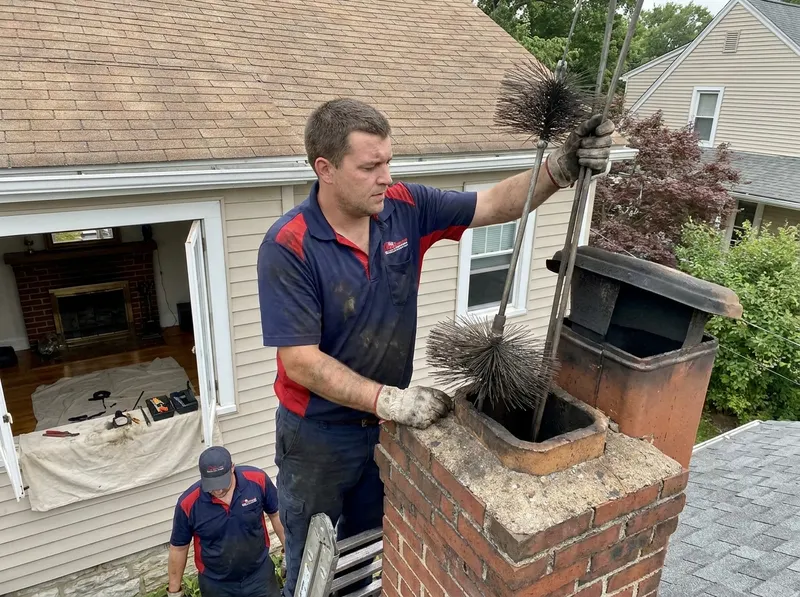
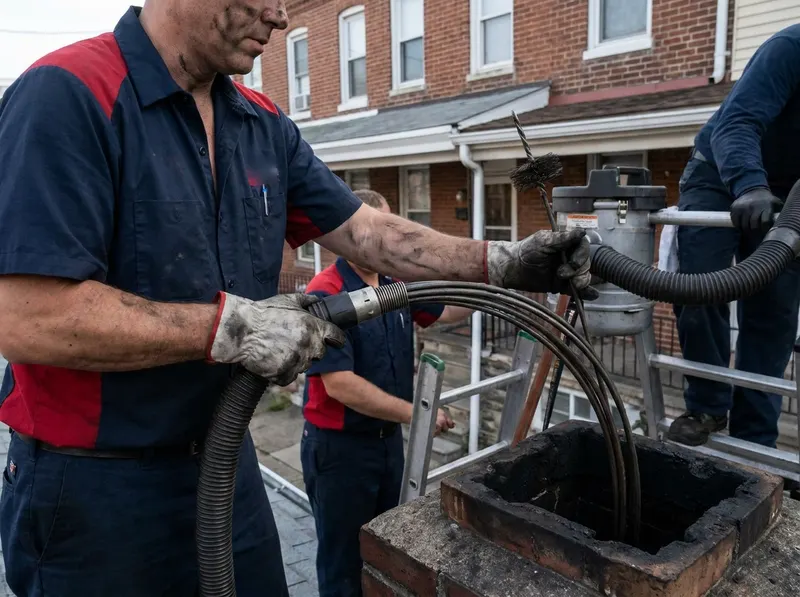
Brush-and-vacuum cleaning that pulls creosote, soot, and ash out of the flue and firebox so your chimney draws properly and burns safer. We tarp the hearth and run a HEPA vacuum so the work stays contained — the crew sweeps without leaving black footprints across your floors, and we sweep the firebox and smoke shelf, not just the flue. This matters most for anyone burning wood weekly, where glazed and crusted creosote can build into a real fire hazard by mid-winter; even a clean-burning gas appliance leaves residue and needs the venting checked. After a sweep we'll tell you honestly how much buildup we found, which is the best gauge of how often you actually need us back.
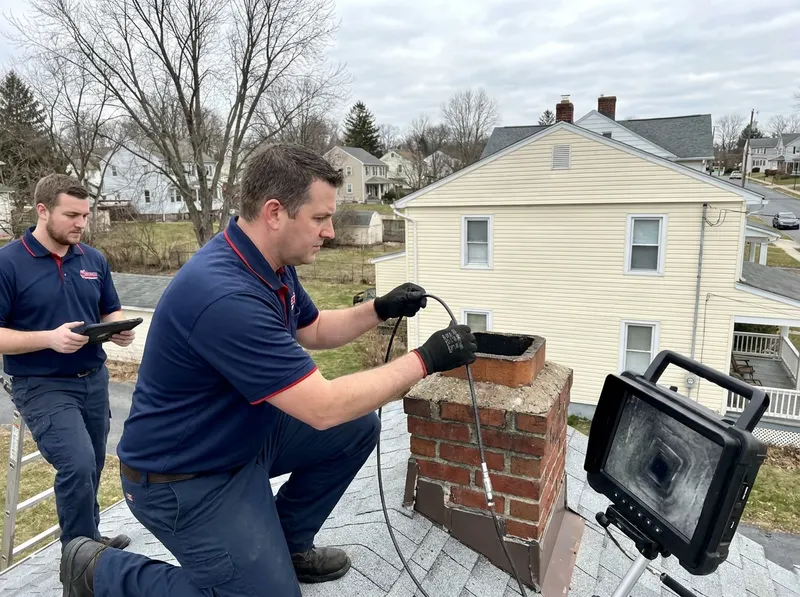
A Level 1 visual for routine, regularly-used chimneys, and a Level 2 camera scan for home sales, post-fire checks, or any time we suspect a hidden liner problem. The camera matters when an older Center City or Hamilton District masonry flue looks fine from below but is cracked higher up — that's where a chimney fire starts and where carbon monoxide can leak into the home. We check the liner, the crown, the cap, the flashing, and the firebox, then give you a clear read on what's safe to burn and what isn't. If you're closing on a house in the Lehigh Valley, a Level 2 with photos is the documentation a buyer or agent actually wants.
Smoke backing up, a strong draft loss, or animals in the flue usually means a blockage — bird nests, fallen masonry, leaves, or a critter that got in past a missing cap. We clear it and check what caused it so it doesn't happen again, then recommend a cap if that's what let it in. We can often get to these same-day or next-day when the schedule allows, because a blocked flue isn't something you wait a week on — especially with a gas appliance, where a blockage can push exhaust back into living space. Spring nesting season and the first cold snap are the two times these calls spike in Allentown.
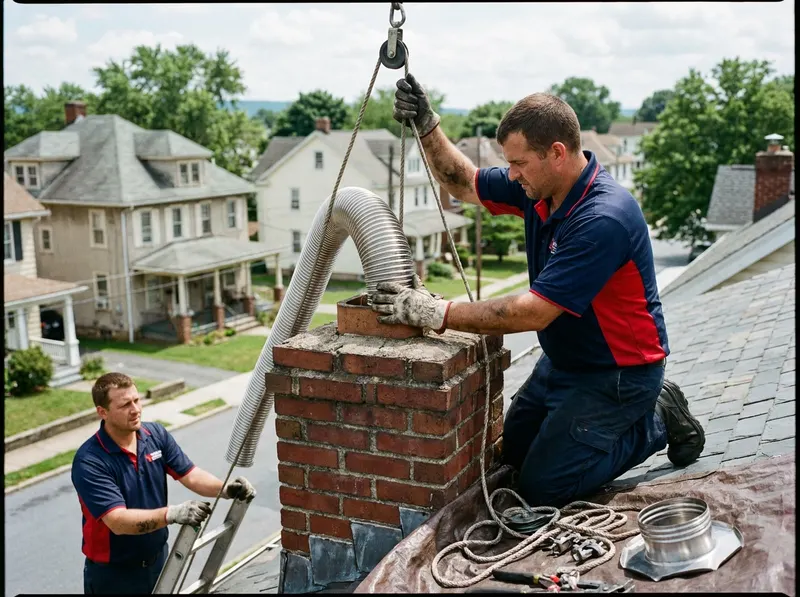
When a flue liner is cracked, missing, or too large for a new appliance, we install a properly sized stainless steel liner. This matters most when you add a wood or gas insert, or when an inspection finds gaps that let heat and carbon monoxide reach the surrounding structure. A correctly sized liner restores draft and brings the chimney back to a safe, code-appropriate condition — and an oversized flue, common in old coal-era chimneys, actually hurts draft because the gases cool and stall before they exit. We size the liner to the appliance, not to whatever was there before, which is the whole point of doing it right.
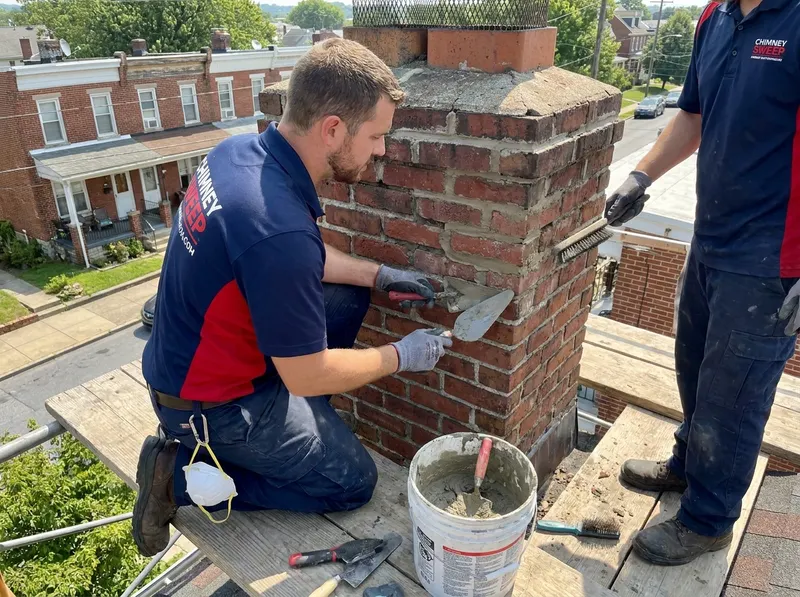
Crown repair, tuckpointing, brick replacement, and waterproofing for chimneys that have weathered the Lehigh Valley freeze-thaw cycle. Water getting into spalling brick or a cracked crown is the single biggest reason chimneys deteriorate here — moisture seeps in, freezes, expands, and over a few winters splits masonry that looked solid in summer. We rebuild the damaged sections and seal them with a breathable, vapor-permeable product so trapped moisture can still escape. Spring and summer are the ideal window for this work because masonry and crown sealants cure best in warm, dry weather, and you're not racing the first freeze.
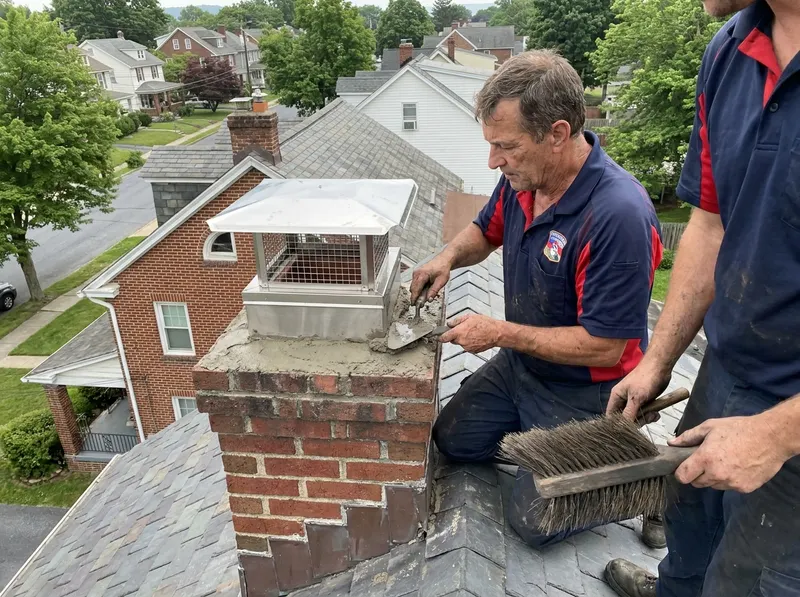
A cap keeps rain, snow, leaves, and animals out of the flue while a spark arrestor screen stops embers from landing on the roof; the crown is the concrete or masonry slab at the very top that sheds water off the chimney. Both are cheap relative to the damage they prevent — a missing cap is the most common reason we get blockage and animal calls, and a cracked crown is the most common reason water gets into the structure. If you've got a stain spreading on the ceiling near the chimney, the crown or flashing is usually where to look first.
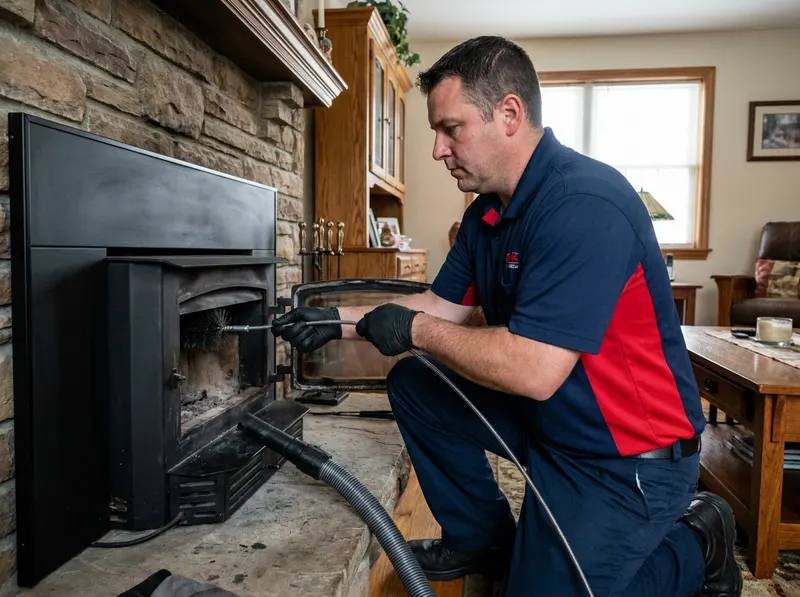
Cleaning, inspection, and venting checks for wood stoves, pellet stoves, and gas appliances. Each burns differently and leaves different deposits, so the service is tailored to what you actually run — pellet stoves need their venting and exhaust path cleared of fine ash, wood stoves build creosote, and gas appliances need the flue checked for proper draft and clearances. We make sure the venting is clear and correctly connected so the appliance heats efficiently and exhausts where it should — not into the room. If you're considering a stove or insert upgrade, we can talk through what your existing chimney will and won't support before you buy.
Most folks call unsure whether they need a sweep, an inspection, or a repair — here's how to decide. If you burn regularly and just want the season's soot and creosote cleared so the flue draws clean, choose a standard sweep with a Level 1 visual inspection; it's the routine maintenance most Allentown homes need once a year, and it's the lowest-cost, fastest visit on the list. If you're buying or selling a house, or you've had a chimney fire or major weather event, choose a deeper Level 2 inspection with a camera scan of the flue liner — the trade-off is more time and roughly $50–$150 more cost, but you actually see cracks and gaps a flashlight misses, which is the difference between a guess and a real read. If that scan turns up a cracked clay liner or gaps in the joints, you're into relining territory: a stainless steel liner fits an older masonry chimney (common in the Old Allentown Historic District and Center City) that no longer passes inspection, while a cast-in-place option fits a badly deteriorated flue that needs structural reinforcement — the trade-off is a stainless reline runs less and installs faster, where cast-in-place costs more but rebuilds the flue from the inside. For exterior brick that's spalling, a crumbling crown, or a leaning chimney, you want masonry restoration rather than a liner — fixing the inside does nothing if water is pouring in from the top. And if you're switching from a smoky open fireplace to a wood or pellet insert, choose the insert plus a properly sized liner — the trade-off is a bigger up-front cost (often $2,000+ all in) against far better heat retention and a much cleaner burn, where an open masonry fireplace sends most of its heat straight up the flue. One more fork: if your draft is weak and the firebox smokes into the room but the flue is clean, the issue is usually sizing, cap, or crown — not dirt — so a sweep alone won't fix it; that's an inspection-first job. When you're not sure which bucket you're in, that's exactly what the on-site visit settles, and the visit fee folds into the work if you move ahead.
| On-site minimum (any visit) | from $150 |
| Standard chimney sweep + Level 1 inspection | $150–$300 |
| Level 2 camera inspection (sale / post-fire) | $200–$450 |
| Emergency blockage / animal removal | $200–$450 |
| Stainless steel flue reline | $1,800–$4,500 |
| Cast-in-place reline (structural) | $3,500–$7,000+ |
| Chimney crown repair | $300–$1,200 |
| Crown rebuild (full) | $800–$2,500 |
| Tuckpointing / brick masonry repair | $400–$2,500+ |
| Chimney cap install | $150–$450 |
| Flashing repair / reseal | $200–$700 |
| Waterproofing / sealing | $300–$700 |
| Wood or pellet insert install (plus liner) | $2,000–$5,000+ |
Your exact price is confirmed before any work begins.
A lot of Allentown's housing stock is genuinely old — the brick rowhomes around the Old Allentown Historic District and Center City often have unlined or clay-lined flues that were built for coal or open wood fires, not the inserts people drop into them today. Those chimneys were sized for the appliances of a century ago, so when someone installs a modern insert the original flue is frequently too large, which kills draft and lets gases cool and stall on the way up. Add the Lehigh Valley's hard freeze-thaw winters — the same cycle that chews up the older masonry you see near Trout Hall and the Hamilton District — and you get crowns that crack and brick that spalls faster than the newer construction out by Cedar Park or South Allentown. The homes around the Old Fairgrounds and Rittersville tend to be a generation apart in how they were built, and they fail in different ways: a 1900s masonry stack cracks at the liner and crown, while a 1990s prefab flue tends to have corroded or undersized metal components. We work across the West End, East Side, Midway Manor, and Center City, and knowing which era a chimney came from tells us where to look before we even get on the roof. Whichever block you're on between Cedar Beach Park and the East Side, the moisture and the freeze are the constants we're fighting.
Neighborhoods we cover: West End, East Side, Center City, Old Allentown Historic District, Old Fairgrounds, Midway Manor, South Allentown, Rittersville, Cedar Park, Hamilton District.
A standard sweep with a basic inspection in Allentown typically runs $150–$300, with $150 as our on-site minimum. The exact figure depends on flue condition, how much creosote has built up, and roof access — we confirm it during the visit, and you can text a photo to (484) 383-7339 for a quicker estimate.
Once a year is the standard for any chimney you use regularly, ideally in late summer or early fall before heating season. If you burn wood heavily through an Allentown winter, you may need a mid-season check too, since creosote builds faster with frequent use. Gas appliances still need an annual look even though they leave less residue — the venting and clearances are what matter there.
Yes — if you've got smoke backing into the room, a sudden draft problem, or animals in the flue, we can often get to Allentown homes same-day or next-day depending on the schedule. Blockages from nests, debris, or fallen masonry are common and shouldn't wait, especially with a gas appliance where a blocked flue can send exhaust back indoors.
Not automatically. Many older Center City and Old Allentown chimneys run fine on intact clay liners. We check with a camera, and if we find cracked tiles, gaps, or a liner that's wrong-sized for a new insert, a stainless steel reline brings it back to a safe condition — that's the only time we'd recommend it. We're not going to sell you a reline a sound clay flue doesn't need.
Fall (September through November) is the busiest stretch in Allentown, so book a sweep 2–4 weeks ahead. There's a second rush right after the first cold snap when everyone tries to light their first fire. For relining, crown repair, and waterproofing, spring and summer are ideal — waits are shorter and the warm, dry weather is better for masonry and sealant curing.
A Level 1 is a visual check of the accessible parts of the chimney and is right for a regularly-used system with no known problems — it's part of a standard annual sweep. A Level 2 adds a camera scan of the interior flue and is the one you want when buying or selling an Allentown home, after a chimney fire, or after a major storm, because it shows cracks and gaps inside the liner that a visual can't reach. The Level 2 costs more and takes longer, but it's the documented read.
A smoke-back usually means one of three things: a blockage in the flue, a draft problem from a cold or oversized chimney, or a cracked or undersized liner. In many older Allentown homes the flue is simply too large for the appliance, so the gases cool and stall instead of rising. We diagnose which it is on-site rather than guessing, since the fix for a blockage is very different from the fix for a sizing problem.
Yes — a cap install runs roughly $150–$450 depending on size and how many flues the chimney has. A cap is one of the cheapest things you can do for your chimney and it prevents the two most common problems we see in Allentown: water getting into the flue and animals or debris blocking it. If you've had birds or a critter in the chimney, a missing or damaged cap is almost always the reason.
Yes, and it's one of the most common jobs we do for Allentown homeowners upgrading from an open fireplace. A new insert needs a liner sized to the appliance, not to the old oversized masonry flue — the right-sized stainless liner is what gives you a strong draft and the efficient, cleaner burn the insert is designed for. We can look at your existing chimney and tell you what it'll support before you commit to an insert.
It's the freeze-thaw cycle. Water gets into the masonry or crown, freezes, expands, and splits the material — repeated over the Lehigh Valley's winters, that's what causes spalling brick and cracked crowns. Older masonry around the Old Allentown Historic District and Hamilton District is especially prone to it. Waterproofing with a breathable sealant after any repair is the best way to slow it down, which is why we push that work into the dry spring and summer months.
For larger repair and reline work in Allentown we'll give you a clear scope and a price after we've seen the chimney — and the fastest first step is to text a photo to (484) 383-7339. Our pricing on this page is honest ballpark range; the exact number gets confirmed during the on-site visit once we can see the actual condition of the flue, crown, and masonry.